Best Apps Like Bandersnatch: Branching Stories That Keep Going

The short answer: what Bandersnatch fans actually want
If you liked making choices in Bandersnatch, interactive dramas offer another way to take part in a screen story. DRAMAGO is an AI-native cinematic entertainment platform. In the DRAMAGO app, viewers can explore interactive titles with different branching designs. DRAMAGO Worlds extends this idea through Story Worlds, beginning with DEADWOOD.
This question has a precise audience: the viewers who finished Bandersnatch, the interactive film Netflix released in 2018, walked every branch it offered, and have been chasing that steering feeling in other apps ever since. The wish list underneath the search is consistent — taking part in plot choices, multiple endings, real freedom over where a story lands, and replaying favorite runs.
Split that appetite into something testable and it becomes three criteria, which organize the rest of this article. Higher branch density, so the story keeps offering forks instead of settling into a single track. Longer companionship, so the experience does not stop when the credits roll. And a fresher library, so a walked branch map always has a successor waiting. Any app that wants to satisfy viewers shaped by Bandersnatch has to answer all three at once rather than one at a time.
The demand underneath the query: Viewers hunting apps like Bandersnatch have plenty of video; what they miss is stories that keep taking their orders.
What the format can do now
DRAMAGO titles use different kinds of interaction, including story choices, multiple endings, quick-reaction events, character interaction, and panoramic scene exploration. These features vary by title. Blood on the Badge is one example of a larger branching production, with 14 branches across 87 episodes.
The official capability list runs one item longer than the five above: AI face swap, live since February 2026. All of them serve a design position the platform states plainly: interaction serves the story rather than performing for its own sake. A choice has to bend something, or it is decoration.
Branch depth ships in three visible tiers. The Queen's Taming Rules, an A-tier romance of 40 episodes, closes on exactly two endings. Sterling Lies, S-tier at 74 episodes, splits into three branch lines. Blood on the Badge, the S-tier flagship live since August 15, 2026, carries 14 branches across 87 episodes, with quick-reaction prompts and panoramic scene exploration layered on top. Those two newer mechanics are recent additions, and the honest position is that their effect is still being verified rather than declared proven.
Two limits belong in the same breath. A single title's branches are finite, and once the routes are walked that story is done, which no fork count fixes. Branch depth also varies by title, a point some viewer feedback makes directly when it asks for more interactive options and deeper branches; the branch count sits on each series page, so you can check the depth before committing a weekend. For how much control the choice points actually hand you, the companion piece on choosing what happens in a story works through the same question.
The handoff benchmark: The appetite Bandersnatch proved is an appetite for steering.
The library: 15 titles, counted honestly
The DRAMAGO catalog held fifteen AI live-action dramas as of November 2026 — eleven interactive and four linear. Episodes run two to three minutes in vertical format with cinematic production values. Fifteen is not a large number; multi-run design is what makes each interactive title last.
The split is written out rather than smoothed over: eleven interactive titles and four linear ones. A viewer arriving from Bandersnatch is shopping in the eleven interactive ones. The four linear titles serve a different evening, the kind where you would rather not be asked anything.
By raw shelf count, fifteen is a small library, and this article will not pretend otherwise. The volume argument runs through design instead of count: a 74-episode title with three branch lines is three perspective runs, and an 87-episode title with 14 branches multiplies the walks before repeats begin. Multi-run replay is what stretches each interactive title well past its episode count.
The catalog keeps adding titles over time, which is why every count on this page carries its date instead of pretending to be permanent. Episodes run vertical and short, two to three minutes each, with production values the platform describes as cinematic-grade. For a Bandersnatch-shaped appetite, the practical translation is that the empty window after a finished story, with nothing queued behind it, is the specific gap a growing catalog exists to close.
The honest count: A small shelf of forked stories plays bigger than it looks, because a run that splits is a run you repeat.
What Bandersnatch gave you, and what picks it up
Five features carried Bandersnatch's appeal, and each has a counterpart in the interactive drama catalog. The table below maps them one to one, from branch density and ending shapes to session length, catalog growth, and character dialogue, with specific DRAMAGO titles seated in each row so the comparison stays checkable rather than impressionistic.
The honest way to test a successor is feature by feature rather than vibe by vibe. The table maps each one to its counterpart, with the seat to take when that feature is the one you miss most.
| What Bandersnatch gave you | What picks it up | Take this seat |
|---|---|---|
| Choice points at fixed nodes, two options each | A three-tier fork ladder: dual endings, three branch lines, 14 branches | Sterling Lies for the middle tier, Blood on the Badge for the full grid |
| Multiple endings | The same ladder plus multi-run design, so an ending invites a fresh run | The Queen's Taming Rules, for a clean two-ending loop |
| One film, watched in a single sitting | Vertical episodes of two to three minutes | Any interactive title, for commutes and bedtime windows |
| One complete work, delivered whole | A catalog of fifteen titles as of November 2026, still growing | The newest shelf of the library, for what just landed |
| Dialogue held inside the branches | Character interaction woven into the branches | The eleven interactive titles, for viewers who want to answer back |
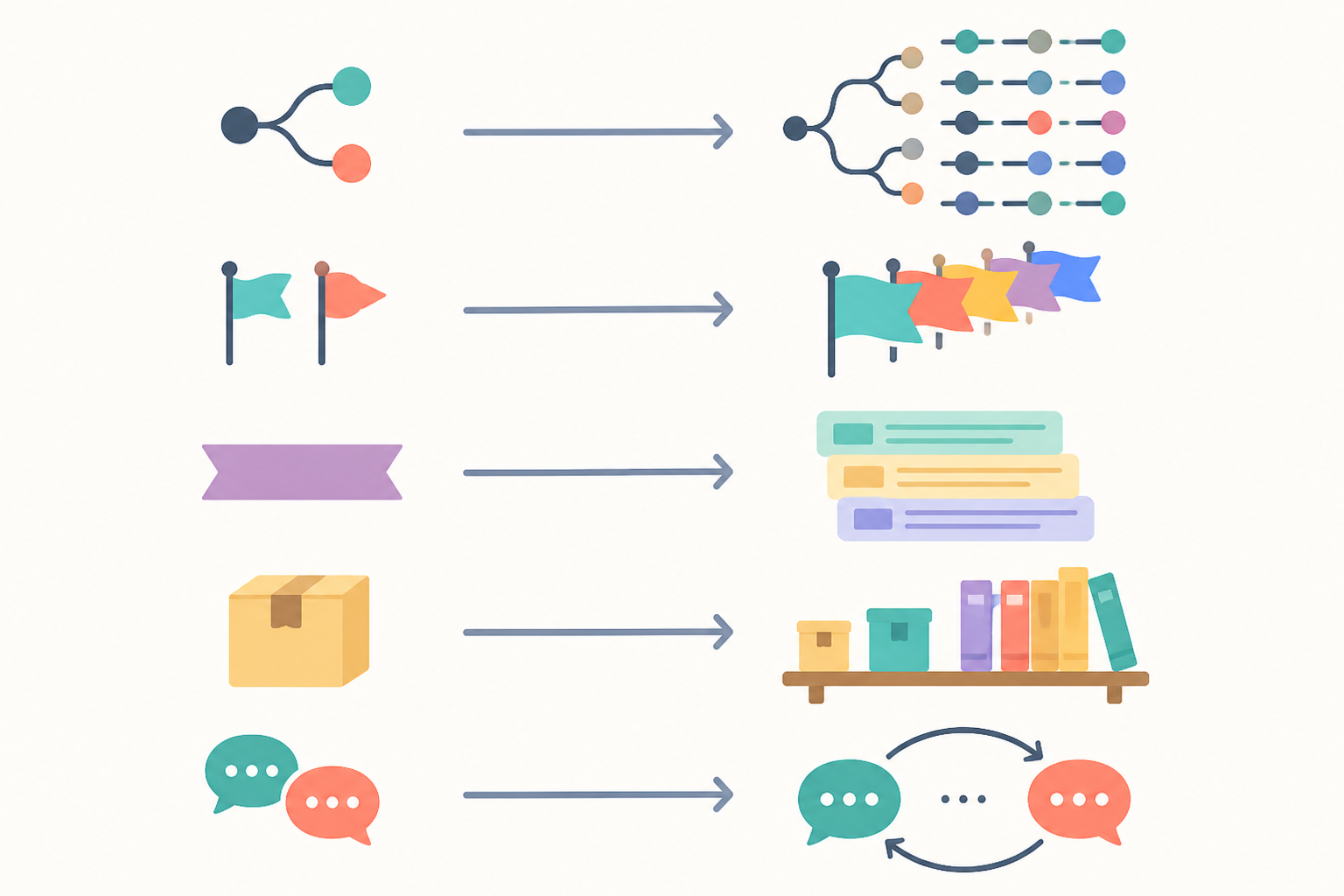
If one of those five mattered more to you than the rest, take that seat in the DRAMAGO drama library, where each series page states its branch structure up front.
The comparison verdict: Same steering wheel, a longer road.
What comes after more branches
Branch density answers the first criterion, but branches are still pre-produced and eventually run out. The next step changes the unit itself: instead of a series that ends, DRAMAGO Worlds offers Story Worlds that audiences enter and keep exploring beyond the episodes. Its first Story World, DEADWOOD, grows out of Blood on the Badge.
Branch density answers the first criterion, and it also exposes a ceiling that every pre-produced branch tree runs into: once the routes are walked, the material is spent, and only new production restarts the loop. The next step on this platform changes the unit itself — from a series you finish to a world you keep entering. DRAMAGO Worlds is the product name for that experience: an AI-powered interactive storytelling experience built around the characters and worlds introduced through the dramas, giving audiences a way to enter those Story Worlds and continue exploring them beyond the episodes.
That first world has a name and a source. DEADWOOD, the first Story World in DRAMAGO Worlds, grows out of the world introduced in Blood on the Badge. The series supplies the worldbuilding, the characters and the established plot; the Story World organizes them into a place built to be entered repeatedly rather than watched once and shelved. The platform's anchor line for the shift reads, "The story doesn't end when the episode ends." The current home for this side of the platform is the DRAMAGO Worlds page.
For a viewer shaped by Bandersnatch, the practical reading is that branches were the question a single film could ask, and a world is the answer to what happens after the map is walked. In the meantime, one viewing order exercises the steering muscle end to end: Blood on the Badge for a first run, the same title again on a different branch, Sterling Lies for its three perspectives, then a linear title to rest the wheel.
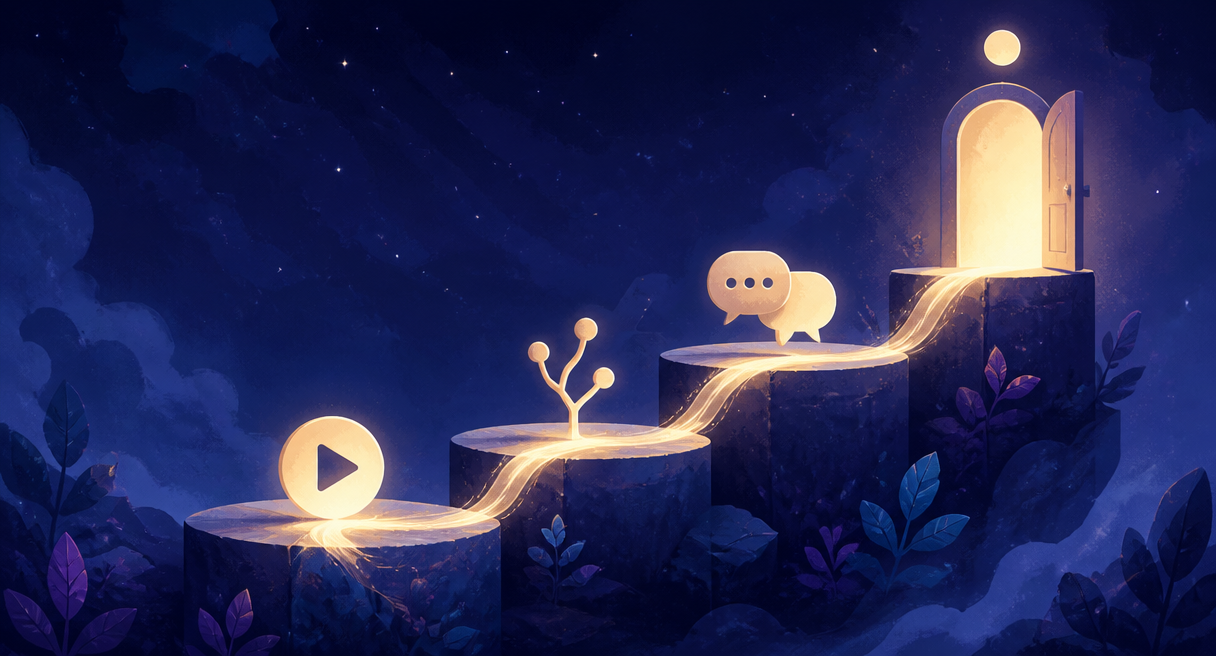
The next bend: Branches decide what happens inside one story; a world decides what you come back to after it.
FAQ: apps like Bandersnatch
Five questions cover the ground this article gets asked most: whether the format really resembles Bandersnatch, which title branches deepest, whether every title is interactive, whether choices matter, and what a story world is. Each answer stays checkable against the series pages.
Is this really like Bandersnatch?
Same ancestry, different body. Both run on viewer choices that change the story; the delivery shifts from one feature-length film to vertical short episodes inside a growing library, so the steering continues across a catalog rather than within a single film.
Which title has the most branches?
Blood on the Badge, with 14 branches across 87 episodes plus quick-reaction events and panoramic scene exploration. Sterling Lies follows with three branch lines, and The Queen's Taming Rules closes on two endings.
Are all titles interactive?
No. As of November 2026, eleven of the fifteen AI live-action dramas in the catalog are interactive and four are linear, and every series page states which kind it is.
Do choices actually matter?
Yes. Endings are reached through the choice record of a run, and branch lines are settled at the story's nodes: in Sterling Lies, each route follows its own lead, so a second run is a second story rather than a rerun.
What is a story world?
A world built to be entered repeatedly, organized from a drama's worldbuilding, characters and established history. The first one is DEADWOOD, the first Story World in DRAMAGO Worlds, growing out of the world introduced in Blood on the Badge.
Choices that leave marks are the through-line of this format, and one page collects the whole map: the DRAMAGO overview is the hub this article hangs from.